Tuesday, 12 November 2013

True Value.


True Value.


I recently enrolled on a course of free cooperative higher education. The Social Science Centre Lincoln is a group of academics and scholars who get together to share their individual knowledge with one another and run courses designed to get higher education into the reach of ordinary folk. I am grateful to be amongst this group and learning new and very exciting things, mainly theories of other renowned authors. The course is called Social Science Imagination and we are presently reading the book called Sociological Imagination by C. Wright Mills.
After last weeks session where we studied this Imagination through the topic of work and a reading by a Feminist/Marxist Kathi Weeks, we got into a debate about work and its value. Or more importantly the value of waged work. The world system of capitalism seems to have a strong hold over us all and work is very commonly understood to be the focus of our lives. It is the hub around which all of our social, family life and identity revolves. Marx described waged work as the central mechanism of capitalism and its lifeblood. Indeed it can be seen in our modern societies that waged work is the principle feature around which everything else moves. At present without this we are not able to provide the necessities of life for ourselves and our families. There are those of us that have the benefit of a system in place for being unemployed, but it is hardly a great substitute and can be barely survived on. At the same time waged work seems to be losing its value in real terms as prices rise and wages don't. Over several decades many political economists have been studying this trend and the consensus seems to be now, that human labour is the single most critical commodity of value. This is described as the one thing that machines cannot produce, even if they can replicate work that they have been programmed to do, they cannot determine their own. 


During our discussions we saw how Weeks' attempted to undo the ethos of her own beliefs, by suggesting that the current model be seriously challenged as a focus for human life. She offers a thought that reduced working hours and the creating of a basic wage for everyone may provide some of the answers to current world issues with regards economic sustainability and work/life balance, even health issues and well-being. 


But if we don't have this system, what would we replace it with? 


Of course we may need to know what is wrong with the current system first, or what we feel is wrong with it, before offering suggestions about its replacement. Weeks' herself acknowledges the limits of conjecture as did bell hooks, but it is certainly well understood that workers don't hate work, they hate the tyranny of the system. It is oppressive in the main, perhaps more observable in the manufacturing and transport sectors, but in subtle ways in all of them. Hierarchy leaves us in no doubt that there is domination and subjugation and who takes which place. Workers contracts are under scrutiny at the moment again because they are always in favour of the management/owner of their labours. And if you stand up to complain as was done in the days of strong trade unions, you will be put down quickly and told to put up or shut up. If you don't like this, then they'll fire you and replace you with another person keen to take your place. And so, the system wins continually.
During our discussions we talked about alternatives, but as you can imagine, a subject like waged work cannot be easily replaced whilst people are expected to continually observe the other capitalist ideal of consumerism. If no-one has any money nothing can be bought, so manufacture needs its buyers as factories need their workers. Its a vicious circle and not one easily understood, by terms of value. Oddly some physical items are deemed far more valuable than many people, even human life itself. OIL, DIAMONDS, GOLD, MONEY and TECHNOLOGY which often are at the center of problems where human life is decided as less worthy. So if the economists of our world say that human labour is the most valuable of all commodities, why is it not the most respected? 


Could we ever consider an alternative to this? Is there anything that could take the place of this valuable resource and bring true freedom to human beings? I believe there is one thing. Something that other desired outcomes forget easily. Sadly it is not at the top of the list when considering change either. But it is at the top of my list and I shall tell you now what it is.
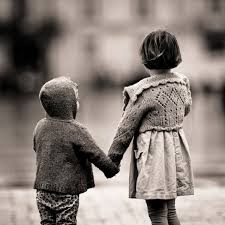


In determining true value I consider:
Of what is truth? Of what is the spirit made?
What is worth living for? And what is worth dying for?
The answer to each is always the same. LOVE, only Love.


Enjoy the Journey...! Peaceful Warrior. 'Peoples Poet'.


Sunday, 3 November 2013

Suspicious Minds.


Suspicious Minds.
A delusion of fear.


Someone says your name, their eyes dart away and immediately you are aware that they are talking about you. They carry on talking but don't look at you again. Do you care what they are saying, what they might be revealing about you to another? Does the dread grip you? Do you start to sweat, become enraged as the conversation becomes quieter, as if you aren't meant to hear any more?
Yes this is one of those old habits hard to break free of. Suspicion attached to what others say about you, both in your presence and behind your back. Of course anyone with nothing to hide would have nothing to fear, would they? BUT, what if you do have something to hide, something you would rather people didn't know about you? Then it could conceivably be a worry and cause you angst. Why does it matter what was/is being said anyway? Why do you care if people see you in a good light or not? What is driving the suspicion about another's motives?


Again, so many damned questions....


I want to focus on the suspicion of our minds that can and does seem to lead to much stress and anxiety about such things. I feel sure that if we took ego out of the equation and saw the reality of the dialogues, much of the fear would dissipate. If we were able to reason clearly upon what other peoples speculations and chatter was pertaining to, we quite possibly could live free of such potentially harmful practices as suspicion, particularly those of the mind. Where in fact they are and can remain, without harming us at all.
Judging another persons motives stems from what ability do you think? Sound reason? Intuition? Direct insights from god? What if I were to imply that what sparks our ability to judge others, is nothing more than our own observed patterns of thought. We see in others, that which we fail to recognise in ourselves...! What I mean is that what we evaluate others are thinking, we too have been thinking, if we were able to be totally honest with ourselves. Failing to recognise it in ourselves is directed by fear of accepting the thought that we could be not as good and as clean and as virtuous as we would like others to think we are. It could simply be a trick of our egos, being trapped into a corner and trying desperately to escape without harm. 


Ego can do this to us. It tries to project an image of wholeness and of righteousness and clarity of action in all we do. It does this by plotting to big itself up by putting others down, or by sabotaging our attempts to live free of its control. If we simply acted more truthfully, and spoke with more actual clarity it could not take over. And we would have no reason to fear the views of others. They would surely see the truth for themselves and know it as such.
It could also be that our suspicions are related to our non-acceptance of our own misjudged view of the world and the actions of people. I believe that if we could accept the mistakes we make and try harder to avoid making them again, with a gentleness towards our doubts then we could be free of suspicions. No one is perfectly equipped to deal with every situation. The ego wants a better place in others eyes and demands that we act to do that. Don't do it, be true to yourself and feel the love of forgiveness and generosity towards your attempts, no matter how awful they are on reflection. Hindsight is a thing that can be as useful as a chocolate fire-guard if we let it get close to the fire. But we can see in using it, how stupid or negative our actions were to all concerned, especially ourselves.

So, what is it that you are hiding? What do you fear other people finding out about you?


We have all had bad experiences happen to us. Few people really would say that they had had no negative or shocking things happen to them. In terms of how we as human beings evaluate the 'seriousness' of those events and how the society in which we live commonly views those things, we might conclude that some events aren't relevant to the way we feel about ourselves. I would argue the case for the defence. My own life revelations have taught me that during my upbringing, several events took place, that I wasn't even consciously aware of. The scars ran much deeper than I could have imagined, but none the less they affected the way I felt about myself and how I looked at how others perceived me. In a way that is not classically, historically considered abuse, I was neglected to a degree during the formative years of my development. I am not even blaming the responsible adults here, they are not entirely at fault either. But abuses of the kind that cause long term damage are easily overlooked, unless they are spotted and corrected. 


Painful as it might be, I feel we should quickly look at some forms of abuse that can and have obviously left deep scars in many adult people, potentially the responsible factors for the current feelings of suspicion. Of course abuse more often happens to children, and that is where we start, for it leads to damaged perceptions as we grow up.
(General note: I am not a recognised Psychologist or Councillor and what I say here in no way expresses whole stock the views of trained professionals. They are merely my own researched observations)


Childabuse. This can take many forms of course, the more recognised forms are sexual, physical and emotional abuse. But the lesser considered one is neglect (abandonment). In the professional opinion child (abuse) mistreatments can be by both commission or by omission and can take place in many varied environments. Child abuse can occur in a child's home, or in the organizations, schools or communities the child interacts with. There are four major categories of child abuse: neglect, physical abuse, psychological or emotional abuse, and sexual abuse. (wikipedia)


The reason I mentioned the first three as being obvious is that for a long time many people didn't believe in child abuse. That is to say that they hadn't actually recognised the affects that events happening in childhood as potentially having such detrimental affects as they indeed have had. Later experts in the field began to determine, that of course pre-pubescent sexual activity with a minor however serious (penetrative or otherwise)(resisted (rape) or consensual) and performed by both adults or other minors, were in fact harmful to a child's development. Next came the physical events, beatings, chastisement of a more serious nature, even tortures that had brought about much suffering in children. And again the direct causes of this then became more apparent as to breeding emotional abuse. Equally so these types of abuse, can and have had physical ramifications, harm done both temporary and permanent to a body. Emotional abuse by definition is not physical, but it can and was discovered to have been the connected outcome to the first two mentioned as well as an abuse in its own right. What is being used to create this type of abuse is mainly fear. A child being told they aren't good enough, clever enough and worthy to be loved are the more common and recognisable forms. But for a long time I would guess the next form went somewhat unnoticed. Neglect is something harder to determine, and far harder to conceive of. Why on earth a parent would have a child for example and then fail to nurture and care for it and show it the love and tenderness that it craves is less obvious to determine. Many factors of course come into it, such as the parent also having been a victim of abuse, either directly or indirectly connected with their own child. Or maybe the parent/s were not ready for this invasion of another mouth to feed and person to care for. Whatever the circumstances, the damage is as equally damaging to a child as the physical abuse. My feelings and beliefs are that abuse has to stop! However slight and however well intentioned discipline is, it needs to be measured out with caution and balance, or the ramifications could be life changing for the child. 


So in conclusion, I truly understand why it may be difficult for anyone to want to revisit their particular pasts and demons. But I believe that from my own personal experiences, this was absolutely necessary for me to let go of them. To be free of the troubles that have caused me untold sleepless night and breakdowns in communications with loved ones in relationships, it was completely justified. As a result I feel far more whole as a person and much less suspicious of others idle chatter. Sadly there is still one side affect to having opened my eyes to this issue of society. I can see in others that which I previously failed to recognise in myself. Personal troubles. And that is not an easy gift to carry by any means. It often makes me choose differently, and determine to avoid certain people. Not because I don't care, but because sometimes the best way to help another person, is to not help at all. I've tried many times and it came across as interfering and less than compassionate to the person I had tried to assist. Be careful what you do, and the reasons for your doing it is all I offer as advice here.


There were many other troubles that could have been discussed here relevant to the topic, cheating, lying, jealousy and greed for example, however I shall save that for another day.

Phew....that was a heavy one to let out. I sincerely pray it offers a help to you, as it has done for me.


Love, peace, light and harmony.
Namaste.

Peaceful Warrior.


Friday, 1 November 2013

Talking the talk or walking the walk.


Talking the talk or walking the walk.


Which one of these do you think refers most readily to you?

I know it's hard isn't it, to instantly put yourself in the first category? We would all like to say that we are from the second and that our actions were a definite proof of this. But whom amongst us is prepared to be brutally honest and expose their weakness? I say this not to judge anyone, merely to debate a subject that I feel needs to be opened for discussion. I have honestly found myself regretting this personal scrutiny on occasion, as the truth was not what I believed it to be upon closer inspection. 


What do I mean by the above statements? Well it indicates that sometimes we are very good at talking, saying that we will do things and making promises. But in contrast, it looks at whether we actually carry out those words, the suggested outcomes, the promise.
Talking is an action but it is somewhat ethereal. Walking is an action which is not, it is visual, it can be seen, observed and measured in a way that words cannot. Walking is a direct action, tangibly recognised outside of any language barriers. Talking is worthless if the listener does not comprehend the speaker.


So how do we go about quizzing ourselves, despite potential reservations to uncover the actual reality?

Primarily I would guess that our egos won't let us be seen in any derogatory ways. It is too embarrassing to admit we have failings and that we are not fully focused on being more honest and open and even self critical of our own lives and motives. We don't want to recriminate ourselves with any investigations as to our true motives and agendas, do we? Surely we want to protect ourselves, be seen to be the perfect image of integrity and of determination to do as we promise and act as we say we will. I once again come back to my own doubts as to this perfect integrity, if in fact it does exist. Not to be harsh on myself I might add, but simply to readjust my behaviour so that my motives and personal integrity needn't be questioned by myself in too many instances, or on too many occasions.
Clearly we need to be open, critical (in a constructive way) and honest if we want to truly get to the bottom of our intentions and motivations.


So hands up who cares..!

Who cares what others think of them?
Who cares what we think of ourselves?
Who is ready for some therapeutic activity?
Who would like to be clear of any doubt?

Firstly let me say that I am really doing this for myself. I had my hand up to all four of the above questions. (If anyone could have seen me, I'd have died of surprise. I live in a block of flats...lol) What strikes me is this. That despite having given up a life of pursuing material things, highs of stimulation from addictive behaviours and searching for utopia, I still feel as though I could do more. I still believe that I am able to regularly review my progress and make plans for more of a determined process of change. Specifically with regards to choices that affect other human beings, sentient creatures and the planet. I'm certainly not berating myself either, as if I've made no real progress all these years, quite the opposite. I am proud to have achieved so many new an innovative ways of healing myself and the earth. To have given up so many harmful actions and paths of neglect has not been an easy task, it has taken great fortitude and courage. It would have been far easier to clear off and live in a field in the middle of nowhere and never see another human being ever again. Live off the land and have a solitary peaceful existence. But come on, wouldn't that be just a bit dull? No conversation, no intimacy of human interactions and not even a smile once in a while from a stranger or a friend. It might make the choices of whether I had done enough become irrelevant, but it would not be rewarding, like when someone tells us that they love us and appreciate our being there for them. No, I'm still here, plugging away at the world and its oddities and the possibilities for a revolution of consciousness that would give each and every one of us a better chance to enjoy the experience of fairness, greater equality and the generosity of peace and love. I use the word revolution because it instantly makes people think of radical change. In a way I believe that is what we actually need to happen, whilst still understanding that human beings in their complexity cannot abide this pace easily. For all of history almost we have evolved slowly in our educational systems and our political will and our humanitarian efforts to be fair. So its no small surprise that we will not choose a greater speed to adjust and evolve our thinking patterns. BUT, I have to say this, do we really have that option NOW? In the world in which we are currently living, almost nothing is dependable, stable and secure any more. We all live to a degree in fear of what is about to occur, whether it be in the financial situations we find ourselves, or in larger global issues, or even in personal troubles dependant on the outcomes of the systemic ones. Pretty well all of us are affected to some degree with the impacts of global warming (climate change). Changing the terminology by the way does not eradicate the problem that is defined by this wording, it merely hides the urgency to act. The power plant in Japan is clearly ready to cause massive new damage and environmental fallout. Political systems are failing and oil is running out, just to highlight a few current topics.


So getting back to the discussion at hand. Have we, any of us, done enough? We've been talking globally about many things and coming up with 'bandaid' type fixes for them. When are we going to be radical enough to really tackle the issues we face globally rather than just talk and talk and debate and go to more conferences around the planet (causing more pollution etc, etc)?
I personally see that global change will not happen for a very long time following the current processes. In fact the debates may well be going on long after the chance to stop and change our destructive nature has passed, and the planet and her eco-systems finally collapse. Then it will be too late to do anything worthwhile. But sadly enough, being faced with this one choice only scenario, might just give rise to the will to do something seriously definitive. 


So if we are not going to do anything in a big hurry globally, is it all over barring the shouting? Will humanity finally annihilate itself? Should we just not bother caring, as we probably won't be alive to see it then either? Maybe we should all just be selfish take what we can get and screw the consequences. 


I hope that will not be the case. I am sure there are alternatives, in fact it is obvious there are. The problem now seems to be where do we start and which of these alternatives do we follow? I am no great leader, no truly wise man, no reader of runes nor listener of spirit guides. What I am is a warrior for change. For me the clue lies in simplicity of action, not the complicated actions of governments and financial institutions. Nor in the messages of angels or the wind and rain. The planet is talking to us. If we are listening to her we will know what that message is.


I've said this before and I will say it again, as I feel it is the crux of the matter at hand. More than talking the talk (noise) I walk the walk (action).


As Gandhi declared in a speech many years ago, a rousing and effective spectacular that I would have loved to have attended.
"You must be the change you wish to see in the world".

What does this somewhat obvious set of words mean? And did Gandhi himself believe in them?


According to all that I have been able to read and hear about this man, once described by General George C. Marshall as, this little brown man in the loincloth.. Gandhi never failed to live according to this conviction. He lived a simple life, wove his own cloth grew his own food cleaned his own toilets and taught by example that he needed little of the trappings of materialism. (A somewhat stark contrast to present day political leaders it might be noted)
He believed that for change to occur it had to begin with personal action. Each person making necessary changes to have less and almost no impact on others. In this dedication he proved that a life of action can change the world, for it had significant affects in India during his lifetime. And, his legacy is still loved and admired today.

I believe it really is this simple. We take a look at our words, what we say, and what we really mean mores the point. We decide if those words are founded on any certain knowledge and determination to act or if they are merely meant to impress others. And then we put into action the things we said we would. Regularly reviewing and refining the process and the outcomes until we are content that enough has been achieved. What other sense can our words have if not to bring actions for the good?


So in conclusion, once again, I urge each one of us to seek to be the change. Not to leave it up to others to do for us, on our behalf. No, that is not the spirit of how change occurs. By our personal choosing and our determined actions the world can become a much better place for us all. By our looking at the way we speak, what we say and what is motivating our speech, we can find much happiness. But only in the doing of it will we reap true reward....!

And in the larger arena of life, the global concerns, we can potentially avert the annihilation of our species.


May I offer my love to you all, for being patient and interested in this consideration.


Namaste.
Love n Light
Peaceful Warrior.


Tuesday, 29 October 2013

Have we not got enough?


Have we not got enough?


It never ceases to amaze me just how much luxury we all currently have, both material objects and levels of longevity. Well of course that is not the case for the majority actually, though to us in the west it would appear to be the case. The real truth is that almost 80% of the worlds populations have very little of these commodities, and their lives are often cut prematurely short through hunger and disease. Kind of odd wouldn't you say? That 20% of the people of the world have more than enough and may not even realise their good fortunes. A conundrum indeed, do we need more or do we need less (to share more)?

The undertones of the issue I see, are the feelings of not-enough-ness. A supposed lack of Abundance. People seem to think that in having more (mostly material things) they will somehow escape the feelings of not being enough. The evidence is however, that many if not the majority of these poor souls never reach a point of satisfaction. They continually strive for more and newer gadgets and clothes and wealth. Now I am not here to criticize any of this, simply to point out a few fundamental facts, that may be escaping these people, and potentially direct us all to a way of peace and freedom from the outcomes of this preoccupation. (Who's eventualities end in mental dis-ease and many other devastating physical health symptoms)


1. The items we strive after, are intrinsically dead. They are lifeless, motionless, without animation, created by destroying that which is living. Its a type of necrophilia to be killing the living earth and creating lifeless gadgets and other material objects. No-one (not even me) would argue that some of these items CAN have a beneficial purpose and serve us well. They are tools to give us ease of life and help us to be able to achieve many more tasks and objectives than we previously were able to achieve in our lives or certain time-frames. However we are all aware of many things that we hardly ever use, but do very little about this if we are honest. We stick them in cupboards and attics and garages and sheds and containerized storage facilities, for a day that often never arrives. My grandmother had plates and crockery which I never actually remember her using, and when she died all that happened was that the family argued and fought over who got what. And for what? So that they could also stick it away in another drawer, cupboard and garage....


I hope that you see what I'm saying. Billions of created (dead) objects are not even serving any useful purpose at all, except possibly the occasional reminder of a loved one. We all know someone who's house is so full of 'things' that their life is cramped and challenged by fear of someone stealing their dead goods. If we were actually using this stuff, then it wouldn't feel so destructive and harmful to mother nature. But in the main we all do this. We take and we take and we give little mind to what the effects of our wanting/taking will have on her. 


2. We really don't need all of these things to have a happy life. Before they were invented, we managed. We made the best of our situations and got on with appreciating Nature and our natural environment, the beauty in it and how to enjoy it. Gatherings with friends, shared meals, sharing of tools and equipment, resources and the abundance of mother earth. 


An example of this:
In rural communities the farmers would employ the local people to produce the crops and when harvest time came, even the villagers whom usually had other jobs, businesses, pretty well all gave a hand to bring in the sheaves. This provided unity of purpose, a shared income, and meaningful work for many people.
When mechanised farming came in, the farmer needed less farm hands, was able to create more product from less resources of labour and create larger profits. (The debate about profits/loss can go on all year, and I'm certainly not inferring farmers were/are greedy and therefore the cause of the suffering) But people were the ones to lose out in this scenario, and also the earth. Because labour wasn't needed so regularly and tractors, combined harvesters and ploughs, harrows and crop-sprayers used resources of the planet to be made. And then buildings to house them. (Have you also noted the amounts of old rusting, rotting machinery there is laying around in farm yards/buildings? These could have long since been recycled)


3. The clothes, shoes, jewellery, ornaments, make-ups, perfumes, designer things, named brands and technology have all come at the cost of using natures stored resources, and not always in very environmentally friendly ways. I too like some of these items and get great satisfaction from having their service. But it bothers me, that we as a race, have not really considered the long term damages we have wrought in having these things. Our wants have overtaken sense and reason, our needs have given us almost no conscience for the results of this action. We need to see that coexistence and longevity as human beings and Nature is a fine line that cannot be crossed without huge impacts.


A great friend of mine and a psychic, Mandy Peterson recently wrote an article likewise describing this very phenomena and what she considered the causes to be, and noting the increasingly damaging side affects of such behaviour. We have both actually been championing this very issue for many years. The ways in which it has become so evident that we, human beings are causing the majority of this problem is clearly documented in scientific studies and ecological research. Al Gore, Severn Cullis Suzuki, Friends of the Earth, Greenpeace are amongst the main body of action being taken to re-balance this caustic behaviour. And others like Mandy, Radical Routes, Abundant Earth Community, P4eace, Fellowship of Intentional Communities, Diggers and Dreamers (and the groups/communities and organisations they champion) and many many more are all taking positive steps towards de-cluttering the earth of the materialism and its cruel harmfulness towards Nature.


As a warrior for change and respect for Nature I have cut down significantly on using carbon energy. I make more informed choices now with regards purchasing products (which does not mean, buying nothing) so that I can have a clearer understanding about how these actions have impacted on physical resources. I am not totally against people benefiting from creating items for people to use, nor in favour of suddenly closing factories. But I am saying that I have seen other ways of providing things that have less impact on the planet and communities. I also gave up collecting huge stores of material items and now I share the things I had previously and keep little more than what serves me daily. I don't own a car either. That way I don't need to impact on using petrol (who's companies destroy and harm the planet more than most) need insurance (another largely greedy commercial enterprise) nor roads already laid. I ride a bicycle and walk everywhere I can, and I occasionally ride in a car or on a bus or train. I buy foods from local enterprises and check that they have acquired them from greener sources as much as is humanly possible. I work to support myself, which as I have little outgoings, is far easier than before. Which gives me some free time to pay attention to the beauty all around me. Walking is a fantastic way to see Nature and engage with it and reconnect with the beauty it shares for free. Travelling at speed means that we miss most of this engagement.
I recount the above measures I have taken merely to highlight what is possible and not to say anything heroic about these actions. There are many more besides. It is far easier though to go with what everyone else does, but it would not be the right thing to do. As I have seen the benefits of this choice, I wanted to share the idea that I am helping to implement here in Lincolnshire. It is presently called the Abundant Earth Community. Please check out the google group, read the blog entries and share whatever you can if you feel the passion to help create sustainable alternatives for our futures.

And please remember, that you are enough. Without all the trappings of the world and its greedy, selfish negligence of the planet.

I AM ENOUGH..!


Love, peace, light an harmony.

Namaste.